Showing posts with label libraries. Show all posts

Saturday, August 7, 2021

Library Legs, Spring and Fall 2017, A Terrible, Terrible Visual Representation


First of all, I apologize. 

I had to share it. It sat there looking at me from my desktop, daring me to do it, for nine-ish months. There's no denying I've been distracted in 2021, but you could understand my hesitation in sharing it at all. Look at it. 

Such meaningful shenanigans corner me into one particular existential corner: Am I or am I not a Serious Person? 

Or am I but a Dancing Monkey? A Cop from Keystone? A Gibbering Foole?

Finally, in this year of our lord 2021, can I not be all? The truth of the matter is that I had great, dissociative fun making this insane map. And if you've clicked the link to get this far, I've made you look. That's good enough for me.

It started semi-seriously. I just wanted to see a visual representation of my travels. After all, I'd trekked some 13,000 miles (not including in-town back and forth from lodging to libraries to dinner to tourist sites, etc.). It was worth seeing the whole picture. 

Any endeavor to "make" a map from scratch was immediately out the door. A quick Google search reminded me of ye olde publishing days, when more than one author asked, miffed: Can't you just make a map? As though we had cartography interns on call, ready to scratch out a detailed rendering of 1756 South America, denoting cultural shifts, death tolls, political upheavals and in all the eye-friendly colors of the world. If Google Maps served me so well on the road, it could do it once more, by way of entering all the destinations up and taking a screenshot* of whatever came up at the end. 

It was more challenging than expected. For one, there are limits to the number of destinations you can add to one trip in Google Maps. It would have made my life much simpler if Google had allowed them all, but I was happy to at least get the general outline of the trip, regardless. 

The lucky break to the whole, messy undertaking was the fact that I'd saved links to every single destination in the spreadsheet I made to plan the trips back in 2017. Every city, place I stayed, every site I visited. It should surprise no one that I had the whole adventure planned with very little room for spontaneity. Not to say I was never spontaneous, especially when I had no choice, like when I got elevation sickness in Colorado followed closely by the flu in California. There were times I could not bear the idea of sleeping in the car, whether I was jonesing for a bed, a bathroom, and privacy or just getting a bad vibe from a rest stop, so made a reservation at a hotel instead. This may not be so much "spontaneous" (which suggests positive attributes like courage, fun, outgoing, and so on) as it is just "less rigid," but being able to roll with the changes was still a significant departure from the person I'd become in New York: sequestered, heart-sick, and deeply anxious. It still shakes me up that I did any of this at all.

So, the map.

Hearts mark cities and sites I visited, though they do not represent every single place I went (impossible in this format); lizard eyes mark where I bunkered down, sick as hell; places in gray are Google; places in purple and orange are mine; dark blue line is leg one; light blue line is leg two. Note the directional arrows! I visited every state in the Western United States, with the starting point in Wichita noted with the giant smiley star. Why stop there? I added clips of photos I took on my journeys (which rendered crazy) and then, for reasons known only to my 2020-sequestered-psychologically-addled mind, I added pictures of my cats, too. WHY NOT. After all, it was during one of the first car-sleeps during leg two that I realized how completely I loved them as I laid there in the dark of my Rogue feeling blue and keening for their little fur-faces, followed immediately by snorting in derision at what a marshmallow peep I'd become. But if you find maps boring...well, that's weird, but if you do, the cats really add a level of zip and zing most maps could never offer. Look at those little faces. A few twerpy cats would have certainly spiced up some of our scholarly monograph maps. This is a fact.

Why the giant yellow eye icon at Loveland Pass? Why the rainbow sticker at Jackson, Wyoming? Follow the links and relive my library tour of the western United States! I'm doing a bit of that myself over on my new Instagram page, created primarily to supplement my new freelancing website, though it has been a blast revisiting these travels. Even more so after the grim, anxiety-ridden wake of 2020. 

So does my fever dream of a Library Trip 2017 Map make me less of a Serious Person? More of a Giant Doof? Does it matter? And that's what made me finally post it. It's stupid and I love it. And it shows just how far I went...and how far I've come. Liberation from constant panic is next door to one's best conception of heaven. Next up: liberation from self-consciousness. That would take care of the serious/not question for EVER.

Actually, I'm not sorry. I'm not sorry at all.

*fair use, look it up, bay-be

Monday, July 26, 2021

Saving Century II: The Irreplaceable Saucer of the Midwest


When I moved to New York City twenty years ago, I promised my family that I would try to return home at least once a year. As my work responsibilities grew and my personal life expanded, coordinating these trips became more complicated, but I kept my vow for the most part. Save the half dozen times I chose to fly straight through to Kansas City, renting a car to complete the trip to Wichita, I primarily flew out of LaGuardia at the crack of dawn with connecting flights to tinier airplanes through Atlanta or Chicago, finally landing sometime around noon Central Standard Time at the old Wichita Midcontinent airport. No matter how tired or frazzled I might feel from the hustle and jumble of air travel, I always looked forward to driving the flyover span of US 400 toward my mother’s home on the east side of town. Past the flat boxes of retail, through old neighborhoods thick with trees, the proud spire of the Friends University clocktower, then a curve, a sweep upward, and suddenly, to the north, the singular skyscape of downtown Wichita.

It has always been a comfort and a thrill to see it, the color wheel cross-section of light, bright blues, the monolithic flight control tower of the Garvey building, the black glass hulk of the former Bank 4, the improbable brutalist Lego transformer that is the old library, and that bodacious saucer, somehow futuristic yet still mid-century modern and forever too cool for school, the Century II Performing Arts and Convention Center.

The old, brutalist library at night.

The first, informal whispers that the old library and Century II might be leveled for downtown redevelopment was met by many Wichita natives as far-fetched and, frankly, unthinkable. Buildings are not paper cups to be tossed after use, and buildings as architecturally significant as Century II and the old library are certainly far beyond mere "structures." This wouldn’t be like tearing down an old Costco or Wal-Mart. These buildings are works of art. With a little refurbishment and a bit of repurposing, they have decades of life still left in them. Unfortunately (and completely unsurprisingly), the same minds that shoehorned the uninspired Intrust Arena downtown--with little regard to aesthetics or parking, it seems--are at it again. Populous, as part of the deceptively named Riverfront Legacy Master Plan coalition, promoted a rigged “community outreach” by means of a push poll, and initially proposed a selection of five plans for redevelopment on the river, only one of which kept Century II. It is clear that little to no effort was put into using the buildings we already have. Why refurbish, repurpose, and rebrand solid works of art that were built to last when you can build new, prefab, cheaply constructed boxes that will be ready to tear down in less than thirty years for yet another money grab?

Back in her library glory, full of stacks.

The corruption at the root of Century II’s possible demise has been remarkably slow and unabashedly deliberate. While Wichitans lived their lives, paid their bills, grew their gardens, and raised their kids, the city’s plan for Century II was to simply let it go to seed. Instead of caring for this remarkable building, an irreplaceable piece of architecture, the city manager decided to just let it rot. Paint and power washing was put aside, improvements were not made, and only the most critical of broken things were fixed. The plan, it seems, was to let it slowly deteriorate, allowing the facilities to become so rundown, outdated, and under resourced that the city manager could finally point to it and say, See, it is “no longer viable.” The citizens would look upon the faded, dirty structure and think “yes, we deserve something better.” Something shiny and new. They would forget that Century II was properly maintained for decades, a lovely, strange, one-of-a-kind centerpiece to Wichita’s skyline and treated thusly. Not all of us have forgotten.

Rendering 1. Screenshot from the Downtown Wichita website.

Using the word “legacy” to describe the pre-fab, mini-mall village the Riverfront Legacy Master Plan coalition has in mind is particularly galling. Unless, of course, the lowest bid, aesthetically inconsequential strip mall mediocrity littered across the country is anyone’s idea of a suitable “legacy” for their beloved town. There is a reason that the three “concept” images featured on the RLMP website are vague and almost comically misleading. The first focuses the Arkansas River, depicting it in a decidedly bluer hue that it has ever been this century (or last, or ever, maybe). There is an inset swimming area that should run chills of horror down the spine of anyone who learned canoeing at North High, or has ever braved the river in a kayak, or has ever just walked by the river and caught a heady punch of its aroma. Even in this rendering, the “dream” river dominates, and the rest is obscured by trees and mobs of Wichitans, apparently wild to get up close and personal to the dank and dirty in the proposed river pool. What great works of architectural genius are slated to replace our beloved Century II and library? What daring design is just over the horizon?

Rendering 2. Screenshot from the Downtown Wichita website.

The second concept image features more Wichitans enjoying the expansive park space that would stand in place of where Century II is now. The park layout is flat, plain, and uninteresting. It is, for all intents and purposes, a glorified suburban lawn. We already have a glorified suburban lawn downtown in the desperately trendy, oft-hyped Naftzger Park. Likewise, Wichita already has downtown-adjacent parks that follow the river and offer far more than bland views. The rendering primarily shows people and park space and very little of the structures that the RLMP coalition plans to make or break our city’s lasting “legacy.”

Rendering 3. Screenshot from the Downtown Wichita website.

The last concept image shows the grand design of the new structures, sort of, depicting a generalized, very preliminary version of what the new development will have to offer. There will be two separate venues to replace the one Century II—a performing arts venue and a convention center—two vague rectangles of space that beg the question that if Century II was not fulfilling the entertainment needs of Wichita, why was the Intrust Bank Arena not conceived and constructed to meet those needs back in 2010? The rest of the structures and spaces in the rendering are either park space or the grimly labeled “mixed use,” which brings to mind the fate of the once-lovely little downtown park of my childhood, the aforementioned Naftzger Park, which has now been reduced to an overrated median strip next to mass-produced, derivative commercial buildings. “Mixed use” will likely be restaurants (great) and retail (maybe great depending on what ends up there), but will also likely include office and residential space. Since existing commercial and residential areas downtown are nowhere near maximum capacity, one wonders just who will be utilizing this new, “mixed use” development in the long run? Or are these just short-term goals with no long-term plans?

Winter CII

It would appear that the coalition at least has a dark sense of humor, where their deliberate use of the word “legacy” in their name could easily be construed as petty trolling. One of the proposed parks, which appears to be right in the demolished footprint of Century II, is named “Century Park.” Why? As an homage to the beautiful structure that once stood there with its cool, curved lines, bold and stark and extraordinary? Or is this just a placeholder name some snarky designer thought appropriate, akin to dancing on the grave of ingenuity and creativity, “so long as we get paid” sort of thing? What I do see when I look at that last concept drawing is a whole lot of boxy boxes of no consequence or value replacing buildings that have history, meaning, depth, and beauty.

Night angles of the old library.

Whenever I’ve traveled to popular destinations—New York, London, Seattle, Paris, New Orleans—what always strikes me first is the heft of History all around me. The stalwart permanence of the place. There is always new mixed in—new light fixtures, buildings, parks, ideas—but the old remains. People might go to New York to see a particular show at Madison Square Garden, but they do not go to New York to visit Madison Square Garden for the sake of Madison Square Garden. They do not go to see a single glass skyscraper, though they might appreciate it in the plethora of so many glass skyscrapers. And they certainly do not go to New York to see mini-malls, Super Targets, or Applebee’s. They go to see those stately brownstones lining the old neighborhoods, the elegant spire of the Chrysler Building, the handsome art deco wonder that is the Empire State Building. They walk miles to see the city in all her grandest splendor, the remarkable craft of mason work by hands folded generations ago, the beautiful, etched grace of a city cobbled together by competing interests, compelling stories, and the wearying sweat and toil of our great-great grandfathers. The city’s structures are its legacy in this world, the mark of the human hands, and minds, and hearts who created them, and the history, the story of our human permanence, that even though we pass on, our carefully crafted structures, built ever upward and outward, remain.

Main entryway of the old library at an angle.

It’s been suggested that the whole middle of the country suffers from a sort of vague identity crisis. We are the “flyover states,” the great, blank expanse, the parking lot to the Rocky Mountains. We are small town, small minded. Our cities are stopovers to better places, run through with train tracks, a gas station hub to anywhere but here. Compared to aged cities like London, or ancient cities like Jerusalem, our settlements are mere blips on the timeline, of no consequence, maybe just one bad drought away from ghost towns run flat to dust. We don’t have the alluring seduction of Hollywood, the primeval forests of the redwoods, the shining, dangerous lights of Las Vegas, the breathtaking awe of the Grand Canyon. We are not a destination. We have only scraps of history. And what we do have, too many of us are eager to take for granted. Why is there never room for nostalgia when we speak of public spaces? Is this not one of the ways we create a sense of home and belonging? Arguments to delegitimize nostalgia as a worthy aspect to saving Century II and the old library are disingenuous, dismissive, and critically flawed.

What the city government of Wichita seems to have forgotten (and the Riverfront Legacy Master Plan coalition could care less) is that the revitalization of downtown Wichita managed to take place using the existing structures that had been there for decades. Oldtown is called “Oldtown” for a reason. The brick streets, the old buildings, the sense of history, place—a true destination—made the revitalization of downtown what it is today. Ticky tacky, pressed board construction was never the answer. It is not the answer now. Nevertheless, the bulldozer of progress is chugging on. The old Wichita Eagle building (never a beauty contest winner, even in her youth) was replaced by the standard issue modern aesthetics of the new Cargill building, a similar mishmash of styles and “flairs” not unlike the new library (also near, but not on the river). Similarly styled buildings are rising up where the old Mead’s Corner used to stand and, most irritatingly, a new Fidelity megabank has gone up behind the quirky “Ho Ho” shaped Broadway Autopark, formerly the Knightly Parking Garage, on South Broadway, which was only just recently refurbished and repainted to now be obscured by yet another boxy box of boxness.

In a time when the world is on a precipice of survival, where we collectively seem to only half understand the need to re-use, re-source, and re-cycle, it is all the more tone deaf to tear down perfectly usable, perfectly astounding structures to replace them with stunted, cheap mediocrity. There is no time like the present to prove we are not locusts ever consuming, never building to stay, to stand, to commit, and not just to persevere but build true monuments to our audacity, our midwestern spirit to forge grain and stand into the wind, immovable and bound together. Do we leave crumbling detritus in our wake, choking the river, clogging the banks, or do we make a real effort to prove we as a people value beauty and art, and understand that we have already created something enduring to memorialize our grandest dreams in the name of our greatest virtues, institutions of learning and community? Our library, our Century II. Can we collectively say, Fly over us if you will, but we choose to leave something permanent and indelible, extraordinary and sublime. We dreamt big, wild, and limitless and shouted proudly that we loved this ground, these winding forks in the river, and wished to make our mark, leave sign of our daring, and state unequivocally that We Were Here.

Century II and the old library are worth saving. Instead of taking for granted the things that we have and striving for the banal, we could embrace a new century’s worth of science, education, arts, entertainment, work space, green space, community gathering place, and for a fraction of the cost of a hyped-up strip mall next to another bland park. We already have a sense of place, a monument to our community and generations past, but we’ve got to invest in it to make it prevail, otherwise we commit to a future of waystation grayness, the anyplace rest area in between more enticing destinations. Have your “mixed use” boxes, plan your grand monument suburban lawn maintenance—there are plenty of places around Wichita in desperate need of some investment and invigoration—but do not tear down the two buildings that make our skyline more than just vaguely memorable. Do not erase our identity—what makes us both identifiable and inscrutable—only to build nothing special at all.

All CII and old library photos are mine. If you want to see some truly gorgeous, professional photographs of these magnificent buildings, check out Mickey Shannon Photography and Drone-tography.


Saturday, August 8, 2020

Rewriting HIStory and The Gunslinger Blues (The Dark Tower: The Gunslinger, 1982, 2003)

The Dark Tower: The Gunslinger (1982, 2003)

The man in black fled across the desert, and the gunslinger followed.

So much potential in that opening line, words bending worlds with such heft and grace and unblinking audacity. The Gunslinger is chock full of lines like this ("Go, then. There are other worlds than these." *shiver*), moments that bear the weight of millions of swirling galaxies, the dazzling, dizzying spell of Walter's whipcrack tour of infinity all balanced on the edge of the shift-T on Stephen King's rickety old "office-model Underwood with the chipped 'm' and the flying capital 'O.'" (King, "Afterword," The Dark Tower: The Gunslinger, c. Donald M. Grant, 1982). He set that sentence to paper during his senior year in college and, whether he sensed it or not, his grand opus had begun.

This post will no doubt reflect the wildly schizophrenic relationship I've had with The Dark Tower series since day one, specifically because it centers on the introductory novel that kicked it all off . . . and the revised edition King felt compelled to publish twenty years later. King's own assurances that the changes were, indeed, a "mere thirty-five pages" (and nothing in comparison to the revised edition of The Stand) are even less a comfort when he goes on to say that he's less concerned with the possible grumblings from the "purists" than with the "readers who have never encountered Roland and his ka-tet" (King, "Foreword," The Dark Tower I: The Gunslinger, Revised and Expanded Throughout, Plume, 2003).
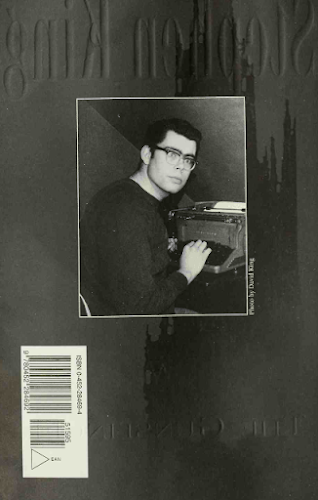
Stephen as a wee tiny author lad.
Wee baby King!


First of all: Wow. Okay. Snotrockets launched, I see. Noted. Let's assume this completely unnecessary barb was due to some residual defensiveness having just completed the last two works in the Dark Tower series at the time he wrote the preface for the revised edition of The Gunslinger. He knows he did a bad thing. Even if he doesn't know it, know it. We'll talk about The Bad Thing in some future post, after I've endured the Song of Susannah once more. I've only read it one time. I was so angry I almost levitated.

Snotrockets be damned, I was happy to read The Gunslinger again. It had been awhile since I'd stepped into the shadow of the Dark Tower (I think I made an attempt during the dark days between 2008-2014, though I am not sure--if I did, I didn't make it far) so I was eager to get back to the source material and embrace dusty old Roland and his crooked world the way I once did, before things moved on, as it were. Before the movie happened, for instance.

Sometimes I talk about the movies, sometimes not, but in this case I'm going to keep it brief: I didn't like it. I wanted to like it. I had hopes. Not high hopes, mind you, but guarded hopes. The casting was magical and brimming with possibilities; Idris Elba's cool charm, Matthew McConaughey's glittery-eyed fervor . . . they just needed to be wound up and set in the right direction. Decisions were made and a terrible, terrible film flopped out of the hybrid nightmare factory, pulled its jittering carcass across the screen, and died in our memories foreveraftermore. At least that's what happened for me. I saw it in the theaters, got a stomach ache, then forgot almost everything about it. After it was released on DVD I picked it up at the library to see if a second viewing would change my opinion. It didn't. Most of it has, yet again, fallen out of my head and evaporated into the ether. I couldn't tell you the plot to save my life. The one thing I enjoyed--the one and only thing--was the depiction of Roland's shooting/reloading abilities. They got it deliciously right, which made all the rest of it so much more disappointing. 

This leads me to The Problem at hand, and one of the reasons that movie will not stick no matter how many times I watch it. Those "mere thirty-five pages" in the revised edition of The Gunslinger are primarily meant to sync the first book with themes King introduced later in the series. Most of these themes (and details, and dialectical conventions) don't start popping up until after the third book in the series, The Waste Lands (1991). It wasn't until 1994's Insomnia that some of those major themes (the Crimson King, for example) started to appear in any of King's works. After that, all bets were off. There is an exhaustive list of connections between the Dark Tower books and the rest of King's work, but chronologically I'm pretty certain it all started with Insomnia. The latter books pull characters and references from earlier King works, and the revisions introduce them, but the nexus in real time is Insomnia.

I liked The Gunslinger, a novel I'd eventually gotten around to reading sometime in high school, but I absolutely adored next two novels in the series, The Drawing of the Three (1987) and the aforementioned Waste Lands. I finally scored the paperback for Drawing of the Three early in my freshman year in college (1990) and devoured it like air, then waited impatiently for the paperback of Waste Lands to release in the Spring semester of my sophomore year. It was more than I could have hoped for: transformative, joyous, wild, terrifying, everything. What an epic this was turning out to be. What a magnificent yarn.

Have you ever heard the phrase "Now we're cooking with gas"? I imagine someone believes this is true. I didn't dislike the rest of the books in the series, but the addition of the Crimson King, the low men, Father Callahan, and other random elements of the chronicle leave me slow mutant rubbery cold. Wet raspberries for everyone. Now we're cooking with fart gas. I remember little snippets of the remaining novels, a bit here and some more there, but most of it a blank to me. I remember some plot points, some deaths, and that one Very Bad Thing that made me absolutely furious, but a lot of it is a mystery. Like the movie, those last books in the series just slipped right off the surface of my brain. I've never even read the come-lately book 4.5 Wind in the Keyhole. I bought it and it grew a velvety coat of dust on my shelf. 

So I took King's word for it, even after he gently dismissed the loyal readers from ago, and went ahead and dove into the 2003 revised edition of The Gunslinger for this chronological reread of all things Stephen King. Cleaning up factual errors and aligning book one with the latter books in the series was not the end of it, however. If that had been the case, I could have just rolled with it. Unfortunately, there was also strange tinkering with character development and details that should have been let stand. For want of an editor with a big red pen to STET STET STET all over that revised manuscript, the gunslinger was skewed soft and blurry, and for no damn reason at all.

I knew it was off from the start; the modifications and omissions were impossible to ignore. While I didn't have the original edition of The Gunslinger memorized, I have read it at least seven times. I am sure I am not the only fan who would go back and reread the previous volumes in the series before breaking open the brand new one from the bookstore. I would plan ahead, checking the pub date and starting off with The Gunslinger a couple of months (or more) ahead of time, followed by Drawing of the Three, The Waste Lands, and so on and so on. Since the last two novels in the series were released just a few months apart, I read them together as one very long tome . . . after I'd finished my last read through of the four proceeding novels. The Gunslinger isn't memorized, but I know it, you know? It's a familiar room in the rambling manse of my brainworks.

Some very kind and patient souls put together a list of most of the revisions on ye olde TheDarkTower.Net, but they missed a few, the first of which I noticed because it struck me so odd every time I read through The Gunslinger anew. On only the second page of the tale, Roland is brooding about the campfires left behind by the man in black, and he wonders if they are "a message, spelled out letter by letter. Take a powder. Or, the end draweth nigh. Or maybe even, Eat at Joe's. It didn't matter." In the revision, the quirky reference to our world is gone: "Perhaps the campfires were a message, spelled out one Great Letter at a time. Keep your distance, partner, it might say. Or, The end draweth nigh. Or maybe even, Come and get me. It didn't matter what they said or didn't say."
Clearly this is about more than just being a kid when King
first set out to write The Gunslinger. Not to worry, this
won't be the last reference to the ominous "nineteen."
 

In this case, replacing the "Eat at Joe's" reference is a sound decision. It never really fit. Too casual. Too out of the blue. Later, when people in a bar are singing "Hey Jude," the reference becomes all the more curious. This isn't our world. Or is it? One could fathom a Beatles song surviving eons, like a lullaby from centuries past, but "Eat at Joe's"? Or is this another world entirely? Are these just echoes of shared culture across time and space? On page two of the first book in the Dark Tower series, the reader simply does not know. It is all on the horizon, yet to be discovered. The "Eat at Joe's" reference was jarring and it had to go.

But take note of the additions, too, and how the once economical reverie is suddenly burdened with exposition that needlessly slows the pace. There are cuts, additions, and revisions throughout the novel that simply do not belong and speak more to a heavy-handed, highly biased perspective than to a clear eye with full-scope knowledge of what might benefit this particular part of the story, sync it naturally to the latter novels, while retaining the overarching voice and pacing of the original. 

One of the most riveting parts of The Gunslinger is when Roland meets 10-year-old Jake at the Way Station. The abandoned structures are in the middle of literal nowhere, with desert surrounding for miles in every direction, and the boy is lost in every way he could be: time, space, and mind. He's been stranded alone for days, maybe weeks, and as time progresses, he loses memory of the place he existed before the new and terrible now. Roland hypnotizes the boy and the narrative transitions into an italicized dream sequence, skittering through a whirlwind of gutting worldly facts and cutting personal revelations. The revelations that Jake is from our world and not Roland's come fast and hard. The careening perspective from the dry desert nothing to the shining 1970s skyscrapers of New York are dizzying and electrifying with implications. Just what the hell is going on here? How did the kid get there? Why? It sizzles and sparks.
This is page xxviii (28) of the prelims, verso
to the next page which serves as a sort of
subtitle to this first installment of the
Dark Tower series.


But this part of the narrative relies on the matter of fact, ruthless pace, each fact slamming into focus as the next comes swinging all sharp edges and more alienated from Roland's world than the last. In the original version, King cuts a quick sketch of Jake's father in hard, bludgeoning strokes: "His father works for The Network, and Jake could pick him out of a line-up. Probably." In the revised version, he expands: "His father works for The Network, and Jake could pick him out of a line-up of skinny men with crewcuts. Probably." The first version is telling and brutal. The second softens it for no discernible reason. 

I could stand the additions and revisions that align The Gunslinger with the rest of the series, even if I don't particularly think much of it is cooking with gas per se, but there were a couple of changes that were just complete nonsense. King, for reasons I cannot fathom (but will perhaps be clearer when I reread the rest of the series?? maybe????), was compelled to modify aspects of Roland's character. If these declawing measures were consistent, maybe the reader could accept them (begrudgingly), but this is not the case. A minor change occurs during the flashback to Roland's coming of age, after he's bested his instructor Cort with the aid of the hawk David. The animal does remarkable damage to Cort, but does not survive the fight. Roland's friend Cuthbert asks if he would like help burying David. In the original, a very Roland "Yes" was the response. In the revision, Roland says, "Yes . . . That would be lovely, Bert."
In the same realm of whyyyy as the epigraph: this.


It struck me so strange I had to look it up. Luckily for me, there is a PDF of the original up on the web (it won't last, they never do). Is it impossible that Roland would suddenly transform into a cordial, drinks-on-the-veranda 50s housewife immediately after a bloody all-or-nothing showdown where the stakes were his whole future and the cost was his hawk friend, David? Is it impossible that the usually stoic, reticent Roland who kicked in Cort's door with murder for another on his mind, his blood boiling, and now beaten, cut, bruised, but triumphant, would suddenly turn into a kindergarten teacher thanking her little students for pushing in their chairs after snacks? Thank you, Bert, for helping me bury my bloody, twisted, murdered hawk which is one hundred percent my bad, ha ha, THAT WOULD BE LOVELY.
The gloss insert, full color art is phenomenal, but I've love the inset 
black and white sketches the most. They only get better from here.
All art copyright Michael Whelan.


No, not impossible. Just not true to the character. And lest you think I nitpick, the very worst alteration to Roland's character is yet to come. This one is widely documented and well known. Most references to it across the internet have stayed diplomatically neutral, but no. Can't. Won't.

On his way across the desert, on the trail for the man in black, the gunslinger comes upon a town called Tull. The man in black has left his mark by way of resurrecting the town drunk (or the Mid-world equivalent, devil grass addict) and allegedly impregnating the resident religious cult leader. Roland stays in town longer than he intended, mollified by the attention and bed of Allie, the proprietor of Tull's only barroom. Roland eventually forces his own hand by confronting and assaulting the cult leader to get more information about the man in black and the whole town (save poor Allie) turns against him. In the original, as the crowd closes in, all brandishing some sort of weapon (though never guns, which are dear in Roland's world), the gunslinger's reaction is "automatic, instantaneous, inbred" and he begins to fire even as he sees Allie being held as hostage and shield, pleading, "'He's got me O jesus don't shoot.'" He guns her down with the rest of them, "the hands were trained."
Messiah Gunslinger


It is a painful moment for the reader, not that Roland's done much to garner sympathy already, but it reveals the gunslinger's past as much as anything, the training, the years between, the struggle and survival. In the revision, the showdown rolls out the same as before, but instead of pleading for her life, Allie screams, "'Kill me, Roland, kill me! I said the word, nineteen, I said, and he told me . . . I can't bear it--' The hands were trained to give her what she wanted." 

Let me stop a second and breathe. If I could punch a sentence in the face . . . well, that would be lovely.

This circles us back to The Problem, e.g. the sort-of matchy, half-baked themes that snaked their tendrils through so many of King's works and became, for better or worse, central to The Dark Tower narrative. In the original Gunslinger, the man in black, Walter, may be the same as the dark man (i.e. Randall Flagg from The Stand) but it's never an established fact. A fan could draw a conclusion, but only if you are really vibing for interconnected story lines and fun Easter eggs. And he is never identified as Marten, the duplicitous usurper behind the upheavals the drove Roland from home and toward his eventual quest to find the man in black. But in the revision, Walter is revealed to be Marten (not in a particularly well executed way, either, which confuses the reader and makes her back track to reread these parts again and wonder whhhyyyy someone didn't fix it before sending this edition to print). In later books, Walter is also revealed to be the dark man, Randall Flagg, the Walkin' Dude because why not. And just like the "nineteen" story that drives Allie mad, it's shoehorned in there with a battering ram.
"There the gunslinger sat, his face turned up into the fading light 
(the gunslinger and the man in black)"--last glossy insert, copyright
Michael Whelan. 


Was it so essential to ensure that Roland could never be so bad that he'd (unintentionally or not) shoot his lover in the in the middle of a town-wide melee? Could the reader not empathize with his plight, the turn of the wheel of ka, the brutal, immediate reality of the situation? The disgusting rape/abortion scene with the cult leader that precedes the town showdown is still in the revised edition, so I'm not sure that changing Allie's fate helps all that much, especially when followed by "his hands were trained to give her what she wanted." In light of what he's already done in Tull, this just makes it worse.

Or was this more about that "nineteen" subplot, the silly, capering clown note from Walter practically daring Allie to speak the incantation that would bring with it unbearable truths from the afterlife? As I said, I don't remember much after The Waste Lands, so maybe that's where the compulsion to jam this revision in there lies. Whatever the case, it's a bloated square peg hammered into a broken round hole. I would think even a first-time reader would see the seams, where the new overlays the old, where the economy of words and emotion are metered, then flattened by a fatuous overextension of "corrections."

The revised Gunslinger came out between Wizard
and Glass
and Wolves of the Calla (Wind Through
the Keyhole
wouldn't exist until ten years later).


In the end, The Gunslinger has always served as a sort of preface to the larger story, the meat of the thing, char(youtree) broiled and juicy, a shock of salt and mean grit of the rub. Despite my extreme irritation at the revised edition of The Gunslinger (which I had never read until now), I  know the next two books in the series are going to deliver the storytelling goods, the world-building awe and mystery. The truth that was lost in translation, so important I can't overstate it, is the careful unfolding of it, each secret piece uncovered in it's own time. In the original Gunslinger, we know there were technologically advanced "old ones" that died out long ago because Roland and Jake come upon a station frozen in time as they travel through the depths of the mountain. The reader doesn't need the added details, like making the handcart speak commercials or adding the North Central Positronics label to the water pump at the way station. The morsels of mystery handed out so sparingly in the beginning primes our hunger . . . and when more details are revealed in later books, the payoff is immense.

It is all the more baffling that King decided to add an all-new epigraph to kick off the revised edition of The Gunslinger. The original didn't have one. The revision shouldn't have one. It is a quote from Thomas Wolfe:


The epigraph is certainly relevant to The Gunslinger, sure, but even more slyly relevant to the Dark Tower series as a whole. I may not remember much of the latter books, but I remember what happens to Roland at the end. A lot of people were Very, Very Mad about it, but I wasn't one of them. Considering the entirety of the work, it fit. I won't spoil it here, except to say that Stephen King seems to be trying to spoil it for everyone with the very first epigraph in the very first (revised) book in the series. I could see why he dug the quote, why he wanted to include it, but it skates too close to saying too much . . . and for what? That little, winking zing of relevance? I think back to that new line from Allie, where she begs to be killed, "I said the word, nineteen, I said" . . . as if we wouldn't remember. Or were too dumb to make the connection from a few short pages back. Doesn't he trust us?

Hands down, one of my very favorite author photos.

I would recommend, without hesitation, reading the original over the revision, especially to those special lil newbies who have never read The Dark Tower series. The Gunslinger is an introduction, a meditation on a mindset, and the first foray into the life Roland Deschain has lived, in pursuit of the man in black, in pursuit of the dark tower, time and again forced to make terrible choices and suffer inevitable sacrifices. A few of the corrections in the revised edition are warranted and sound, but far too many of the changes are needless, invasive, and nonsensical. Readers should be allowed to see Roland's world, and all the worlds that come alive across thousands of pages, unfurl and brighten with color and clarity over the natural progression of the tale.

It should go without saying that everyone can choose their own path: read the original, read the revised edition. Both editions are out there, though the first is obviously out of print. I will choose to reread the original should I ever wish to take this path again, clutch my tattered old original paperback copy close and go cry in a corner. It doesn't matter. The stories, and the very best parts of them, which still stand and set the world to quake with all that beautiful, shattering world building--dream infused, winsome and dangerously wild--are still a hot ride: emotional, riveting, bold, true. It's important to note that. My love is querulous and cutting, but it's is forevermore true blue.

Grade
: B (for the original--it wouldn't be fair of me to grade the revision when I'm so clearly biased against it)
Scary? (0-nope to 10-you will die): 1. While there are intense scenes of violence, even the scariest stuff (slow mutants) isn't terribly scary. 
Warnings: Heavy-handed tinkering, irrational editing, forced revisionist tomfoolery, author-induced spoiler alerts, cockadoodie rewrites. On the bright side, the bigot-y stuff is almost nonexistent save the description of the ill-fated cook, Hax ("quarter yellow"). Whether this was a bi-product of the revisions, I do not know (or recall), but it was a nice respite.
Artifact: The Internet Archive wins the day (and every day, knock on wood)! This time I read the scanned in Plume paperback. It was in good condition (no stains) and evenly scanned (no cut pages). I continue to be incredibly grateful to have a resource like the Internet Archive still available to me (and those like me). According to the CDC website, as of today 8/8, there have been 4.8 million cases and almost 159,000 deaths in the US from Covid 19. Members of my household have been hospitalized for respiratory illnesses in the past and none of us can take any chances contracting this disease. As a former smoker who suffered from chronic shortness of breath, I cannot fathom a more horrible way to die than drowning in your own lungs. The fact that there is no strong, centralized governing body that could have controlled the messaging, the lockdowns, and the subsequent flattening of the curve country wide is heartbreaking and infuriating. While witnessing others go about their lives as if nothing has changed while I scuttle to pick up groceries & prescriptions masked up and sanitizer at the ready, my fury only intensifies. The only comfort has been the voices of others like us piping up on social media to ask, "Am I the only one still sequestering?" only to be met by an avalanche of replies yelling, "Me, too! Me, too!" It is shocking how many people simply do not care about the welfare of others.

So even though the libraries are open (though not entirely), I cannot bear the idea of going and picking up books to take home and read. I don't know what they are doing to disinfect the books, if anything, but it isn't enough. They're made of paper, so really what could they do? One of the things I was working on pre-Covid was my germaphobia, something I was directly confronting by checking out books from the library. Here is the thing, though: It's not like I just lolled in bed and fell asleep reading them or anything so . . . normal. Nope! Hell to the nope. I would get out my lap desk and sit rigidly upright on my bed, touching nothing but the book. If I needed a break for anything, I would wash my hands first. When I was done, I'd tuck it away and wash my hands again. Once the book was finished and safely returned to the library, I would disinfect the lap desk. Being able to do any of this at all was an immense improvement from the days when I could not even enter a library, let alone touch the books or check anything out.

As glum as it makes me to even consider it, this is the first true reason I've found to finally buy an e-reader. As long as the Internet Archive continues to deliver, I can push those ugly thoughts aside, but for the first time ever, I see the appeal.

Tuesday, September 10, 2019

The Gift of Libraries: Requesting Items, Part Deux


The Wichita Public Library stocked Idiocracy. My cup runneth over with BRAWNDO: The Thirst Mutilator!

Look, Idiocracy is mean. Even now, it still comes off as mean, but I've been called tenderhearted in the past and I'll begrudgingly admit that it may or may not be sort of true. The movie depicts a future when idiots outbreed nonidiots and society slides into supreme stupidity living in a ruin of unending garbage, broken automation, droughts, electrolytes, and rampant, unblinking dipshittery. Everything comes from Costco (including law degrees), Starbucks serves sex acts, and an average 21st century man can outwit just about everyone on the planet.

Idiocracy's take on the surviving government is where the movie really shines. And it's where some relief can be found for our current woes...though I suppose it could have the opposite effect, depending on your political inclinations. It certainly did me good to watch it again. It seems less mean and just a squidge more prophetic these days, with the normalization of buffoonery on the daily menu and no end (or bottom to the pit of shame in DC) in sight.

Thank you. WPL! And for future viewers who have never seen Idiocracy (there are so many), fair warning: you're probably going to get offended at some point. It's lewd, crude, delights in the worst stereotypes, and drops the f-word gay slur more than once. And this is coming from the mouths of lawyers, doctors and, of course, your elected officials to the highest offices in the land.


Thursday, June 27, 2019

The Gift of Libraries: Requesting Items


It's been too long, hasn't it? I'll blame the book--when in doubt always blame the book--but it isn't all about the book. Right now I'm only managing editing what I've written thus far, and part of that is to get the taste of the story back in my mouth again, less to do with producing anything new (other than the inevitable rewrites that walk hand-in-hand with editing, regardless).

I would love to blame the holidays (since we all blame the holidays for every egregious act of procrastination), but since the latest was flag day, probably not, though I did coast like a ghost all up and around that period of time between November 2018 and January 2019. Since then? We've been working on our fitness in the household, primarily cardio, with some dabbling in planks which have been quite hilarious and also seriously achy and also breaky. Excuses! Though I would like to be nice and fit for my eventual visit to Lawrence, Kansas, and the beautiful, expansive, and very hilly University of Kansas campus. I'd like to spend time in the libraries, for sure, but would also prefer to do it right, walking as much as I am able and really taking in the sights. For those who think of Kansas as an entirely flat plate of nothing except for maybe fields of wheat, the KU campus can be quite a shock. There are some legit, brutal hills to traverse.

So why stop now and finally revisit the library/travel blog? To celebrate the glory of the library, specifically the Wichita Public Library system. Having been back in town for 2+ solid years, I can say with authority that they work hard to provide quality service to the community. The website is fantastic, the branches are vital to the outlying neighborhoods, and the central, advanced learning library is a true gem, still gleaming new and shiny, with abundant, electrified seating options, airy stacks, phenomenal views, and helpful, friendly staff.

I've been a bit "checked out" (eh heh) with other life events, so recently came back with a vengeance, checking out books, scanning through the DVD selection, and revisiting some old searches I'd started back in 2017. After my initial return to Wichita and setting up a new account in the library system, I created a list of books I wanted to read, which can be done via the website and exists, I'm guessing, as long as your account exists. I accrued the list from old Entertainment Weekly book reviews circa 2007-2016 and "Best of" lists via the internet. Why EW book reviews of all things? Because that was basically all I could rally myself into reading during the worst of my alcohol abuse and subsequent recovery. For all intents and purposes, after leaving behind the heavy burdens of NYC and all that had happened, I was only really ready to read books, cover to cover, when I returned home in January of 2017. Sounds weird, right? Like, how many novelists are known as both voracious readers and voracious drinkers? So many. But that wasn't my alcoholism story. And as we all learned in rehab, everyone's story is different. So, with my appetite and focus for reading finally restored, I searched through the lists of reviews looking for vaguely remembered synopses, stories that sounded intriguing, books I truly wanted to read at the time, then forgot as soon as the next tumbler of wine was drained. I doubt I found them all, but I was able to create a considerable list.

There was only one title the Wichita Public Library system did not have in stock at any of the branches: Blood Meridian by Cormac McCarthy. This was garnered from the online "best of" searches, but I didn't need much prodding to seek it out. McCarthy's The Road was one of the few titles I did manage to read during those dark times--near the beginning of the dark times when I was still mostly human--and while it did nothing for my depression (dear God, the darkness of it??) it did everything in terms of inspiration, awe, and creative energy. If you've never read McCarthy...just, no. Stop what you are doing. Immediately. Go to the Barnes and Noble. Go the the library. Find the fiction, under McCarthy, Cormac. They'll have at least one copy of something. Get it, buy it, check it out, read it tonight. He does things with language, incredible, impossible things. He turned me inside out, for real. Round and round. His is a national treasure and one of The Greats.

The WPL website had a record for Blood Meridian, but no copies available, not checked out or on hold, just non-existent. I figured it would be restocked at some point considering the author and the easy-to-find, "best of" status of the book in general. I checked back to the record (and my list: updating, adding, subtracting as I knocked those long desired tomes out, one by one) from time to time, but Blood Meridian remained zero of zero available in the system. I kind of forgot about it. Until this recent resurgence of reading rainbow vigor, that is. I checked it again and nope, still no Blood Meridian. Finally, after two years, I was done waiting. I figured if I wanted to read it, I'd probably end up having to buy it. There was one option to exhaust before breaking down and making a purchase: Cant find it? Suggest an Item! via the WPL website...


I clicked through to the order form, filled it out with all the requisite information, and found myself at that last question (How did you learn about it? Any notes to add?). I debated skipping the question and leaving it blank, but figured laying it on thick might help more, so I did. Librarians, I am sorry. Truly. I know you know your shit. But I was swinging for the fences. So I might've said it was wrong for any major library system not to carry at least one copy of every Cormac McCarthy novel available because he is one of the greatest American writers, living or dead, and also how dare you. Honestly, it wasn't quite that snotty, but maybe verging on it a little. I wanted that book. And also, seriously, stock your Cormac McCarthy, ya libraries.


I did not think much would come of it...and if anything did, it would be months before I held a dilapidated, second hand copy in my hand. And I would have been glad for it, too, because I really want to read it. Instead, less than a week later, I get notification via text and email that Blood Meridian is on hold, waiting for me to pick it up at my neighborhood branch, Rockwell. You will have to imagine the various cockatiel-dolphin noises that frightened my cat friends and woke the cemetery. YAY MY BOOK, but also whaaaat? 

Like most, I always assumed libraries got stingy stipends in the form of rolled nickels, perhaps via an old sock, handed out yearly, maybe bi-yearly, surely not quarterly, and only to be used on the most urgently required (e.g. new release, big name, bestseller) materials. Certainly there were no nickles to spare on my 1985 wishlist paperback? My initial thought was that maybe the library system stores books with little or no traffic for safekeeping offsite somewhere and that they'd just pulled it from there. I'm not even sure if that is a thing, but I thought it was possible, so much as libraries are like museums where not everything could possibly be displayed at all times. Assuming the story was something along those lines, I hoppy skippied over to Rockwell in the Rogue, overjoyed and ready to pull the old, dusty copy from the hold shelf to finally--gleefully--check it out.

But it wasn't old and dusty. It was pristine. Protected by a brand new, completely unscuffed plastic cover. As I wondered over it, cooing and acting a general fool, I made the guy at circulation check to see if he could determine when it was acquired. Sure enough, this copy of Blood Meridian had been put into the system just a couple of days prior. I was GOBSMACKED. The good kind.

So let's review: I filled out the request form for a 1985 paperback and about a week later the as-new, never-read condition book was somehow in my hands. Purchased, acquired, cataloged, plasticated, and ready and waiting for me at my branch. Not the central, learning library, either. It was ready for me at my branch. I mean, COME ON, y'all. That is FREAKING AMAZING. I even checked the record afterward and sure enough, Blood Meridian is no longer zero of zero available, it's now zero of ONE. Because I've got it! Thanks to the efforts of the Wichita Public Library system and the taxes we pay for the privilege of having such a fine service for our community. YAY!


Post-script: I also requested they add at least one copy of Idiocracy to the collection as a healing balm for these trying times, but no dice as of yet. I'll try again soon, and add more electrolytes.

Monday, August 13, 2018

Advanced Learning Library, August 2018 UPDATES!


I've now spent a fair amount of time in the new Advanced Learning Library in downtown(ish) Wichita, Kansas, and have acquired a number of updates to share.

I'm in the midst of re-reading my blog, doing light editing, taking some notes...and have found that above all else the thing I regret the most is the brevity of it all. Most of the libraries reviewed in Travelrogue were one shot deals; some were visited a mere couple of hours before I had to jet off to another destination. I would have loved to have spent real time in a lot of these libraries (though Pasadena and Seattle spring immediately to mind), primarily to get to know them much better, but also to relay more broad and solid observations in my blog entries. While some libraries suffer chronic ailments (Utah's Magna and Glendale, for example), other libraries that left terrible impressions (oy, San Bernardino) might've just been suffering a seriously "off" day. In most of these cases, I will never know. I have to acknowledge that it is unfair, at the very least. And that goes both ways. For all I know, Pasadena may have the meanest staff this side of Hell and a strict late fee policy or some other bad habits I would have no way of knowing since I never checked anything out there...or anywhere else I've visited, save the Wichita locations.

So, it's nice to get to update my observations a bit, as I've already done for a few of the Wichita-area locations (see Andover, specifically--what a change of heart!). After all, the only way to truly know a place is to spend some real time living in it, right? Plenty of Flatiron workers will eagerly tell you that while the building is super pretty and obviously striking on the outside, the inside is 98% garbage. The bathrooms are teeny tiny--some hilariously so, like you have to step over the toilet and, once closed, the damn door hits your knees--and are on every other floor (boys on the evens, girls on the odds). The finishing is pure rebate, on sale, cheap-o creep-o, mismatching crap, from the white, scarred walls to the industrial, metal door frames. Don't even get me started on the nasty carpet, made of squares so that stained patches might be replaced by new squares...had they actually bothered to stock them (they didn't). Before they installed replacement windows (ugly), the old windows let all the smut of the city blow in and coat everything in a film of black dust. And the "water bugs"--so, so many water bugs, a.k.a. Big Juicy-Yet-Crunchy Cockroaches everywhere. Scurrying on the stairwells, chasing people down the hallways. Falling from the drop ceilings.

I could go on, I really could. It was, in a word, gross. But do I still tell people I worked there? HELLS yes. Because nobody cares about gritty city truth. They just love hearing how you worked in a historic building. And I did, and it was at least interesting, if not entirely...sanitary? Professional? But then what in NYC really is? I remember similar "water bugs" falling from the drop tiles at my doctor's office once, so...yeah. And the same goes with visiting NYC in general, even for a week. You don't really know the city until you live there. Sure, you're surrounded by history with a wealth of arts and culture at your fingertips, but you do have to dodge and ungodly amount of poop on the sidewalks and, if you are really lucky, you may even get to dodge random pieces of paper floating through the air, whipped by the skyscraper wind tunnels and boosted by the subway trains screaming past underneath your feet. Papers smeared with brown something, papers darting directly toward your head.

A visit filled with cab rides tells you nothing about NYC reality, when you're earning your literal dimes and can't afford more than the subway (already an outrage to your bank account) and find yourself walking, walking, walking everywhere always because it is just less of a hassle and the trains don't really go east-west in Manhattan anyway (save one, a hellish ride). Or the fact that you have to carry everything, so grocery shopping is a revolving door because you can't carry what you need in one go, so you shop more than you want, and are sometimes stuck with some pretty vile options (e.g. one local store where a fly was packaged into the steak, nicely fat and juicy all squished up in there and proudly displayed, the whole place smelling of dead blood and Pine Sol). Or just the horrors you see. And you do see them, not every day, but sometimes things can get very real, and very ugly, very fast. Sometimes it's funny (the Fried Chicken Fight being my all time favorite) and sometimes you're getting assaulted in broad daylight on a busy street and no one is even looking at the spectacle, let alone helping you. That last one didn't happen to me, thank God, but it happened to a friend.

Now, if it sounds like I'm harping on NYC, well, yes. I am. Because visiting is one thing--staying in hotels, spending money on restaurants, plays, bars, shows, taking cabs hither and thither, and every day is just fun fun fun. The day-in, day-out drudgery is quite another thing...hour-long commutes stuck in a metal can that smells of mouths and armpits, working all day long and slogging home in a downpour with your broke ass black umbrella from the bodega, feet sodden, ankle scratched from some brush-by on the morning commute so you might have leprosy now, up to your fourth floor walk-up that costs $1200/month in Brooklyn (forget Manhattan hahahaha) and is about as big as the fanciest master closet you ever saw...on television...once.

(Let's be real in this side-side-side note: I'm harping because, quite frankly, I wasn't really into it from the start. I wanted to work in publishing and that is where the lion's share of publishing jobs reside. Ergo, if I wanted to work in publishing, I had to move to NYC. Which I did, and I worked in the industry for over 15 years. Don't get me wrong. At first I loved the new experiences--it was all very different from anything I'd done up to that point--but eventually things turned sour. The drinking was fun...until it wasn't. The job, until the very end, was always worth the price of admission, but to be perfectly honest I'd have been happier in the same job in almost any other US city. I got very tired of the "realness," too dependent on bad people, and started drinking myself into oblivion to avoid thinking about how miserable I'd become. It's not a place for everyone. And once the job was gone, and my head was finally on more or less straight, I left. And NYC, if it cared to say anything at all, would have likely brayed "And don't let the door hitcha on the way out!")


Cheese Grater = Electron Membrane 1
I don't think I'm going to experience anything of the sort during the time spent at the new Advanced Learning Library. Parking is easy (and free!), there are three different ways to handle returns (drive up window, outdoor slot, indoor slot), and checking out materials is such a breeze. I do proceed with caution whenever I need to use the restroom, making sure to check that I'm going in the right one depending on which floor I'm on, but I suppose eventually that habit will fall to the wayside. And the main artery traffic jams? I've run into them a couple of times, but more often than not I take the long way or avoid the first floor altogether. "My place" is on the second floor, now firmly set in stone in more ways than one.

I still use the study carrels, but have found that they are equally beloved by plenty of other people...most days, they are all taken by the time I arrive. That has never been a problem, since I pop over to the staff help desk right next to the carrels and ask to reserve a collaboration room. I've done it often enough that my regular guy remembers my name! And those rooms are very quiet...so long as the people in the other collaboration rooms are relatively quiet, too. One thing they maybe didn't think of was the transfer of sound from one collaboration room to the next. The sound barrier between the collaboration rooms and the library proper is solid, but it's less so between the rooms themselves. It's only been a problem a couple of times, and a mild one at that.

And when neither space is available? I set up shop in one of the many study desks available on either floor. Some of the desks are nested within the stacks, safely tucked away so that only people who are looking for those books in particular have any business being behind you. I'm in the business and job-seeking section as we speak, headphones on but nothing playing, and haven't been disturbed by anyone for hours. NICE.

I've also found solace at the very back of the Research Pavilion on the second floor. The views are limited, but there's hardly ever anyone back here and I don't have to put on headphones to block out immediate noises. And, for some reason, there is a New Friend on the study table I prefer to use...a Brother typewriter, looking all 1993 Fancypantsy. Bless its little clickity heart.

Even nicer? Things have calmed down a bit, I think. The drive for certain staff members to converse about whatnot yellingly out in the middle of the library has seemed to dissipate, thank the lordy lord. It's a generally quiet space, the electricity flows from every which way, the seating is comfortable and varied, and it is just a fantastic place to get some work done. Love, love, love it.

When I looked up the library to get the link for this entry, I noticed there were sixteen Google reviews already, all but one crowing compliments left and right, espousing all of the wonderful attributes of the new space and services, and showing the Big Big Love all around...except for one Giant Asshole who gave the place one star because "it wasn't open yet." I clicked the link and found a lot of similarly entitled, bitter reviews from this jerk, and all over the world to boot. I reported the review to Google, so I hope they take it down. It definitely qualifies as "off topic." Who gives a business under construction a bad review because they have the audacity not to be open yet, I ask you? A dingleberry. That's who. One star.


Over the month of July, signs started showing up in the foyer from the parking lot that explained the art around the building, so I've included some pictures here. Huzzah! Explanations are welcome. I'm glad to see the cheese grater better explained, but no amount of exposition is going to save the Knowledge Noodles. I am so sorry, but ugh. The execution is not successful, neither in the rendering of the bark/tree stand nor in the sizing/writing/reading of the scrolls. I miscounted the number of Knowledge Noodles in my first blog entry since I have spent zero time on the eastward facing "front" of the building. I think there are something like six of them out there. So, noodles noodles everywhere, all impossible to read without getting a headache.


The Avian Migration piece has been installed in the atrium. I am going to have to see it at different times of day and night for awhile before I have a real sense of how I feel about it. The execution does not match the rendering, nor do the pieces move much at all, though they are meant to react to sensors in different parts of the library. From what I can tell, they might as well be moving because of various breezes throughout the library. It is quite possible that the installation is not yet complete, though, so the verdict is not yet in. When I look at it, I can't help but think of the Filament Mind art installation in the foyer of the Teton County Library, made of thousands of strands of fiber-optics, all reacting to library search engine results. It's a visually arresting piece, not to mention objectively beautiful in a multitude of ways. I would guess that there is a vast gulf between the cost of Filament Mind and Avian Migration, and since Jackson is presumably a thriving tourist town flush with cash it stands to reason, but still I hoped for more. That being said, Filament Mind is robbed of some of its glory when daylight washes out the color effects, so perhaps Avian Migration will be better at night, too. I'll have to wait for the summer to pass before I get a real crack at seeing it in a full-dark setting (though a night drive-by this past Saturday showed the interior lit up like the surface of the chain-drugstore sun, so my hopes aren't exactly up). The actual materials used look like holographic. metallic airplanes, so they might react well to laser light, something any sketchy-mcsketchballs store on sixth avenue in the NYC "fashion district" can afford, so why not the Wichita central library?


Sunny day shot, viewed from the doorway.
The outdoor tables and chairs for the reading pavilion were finally delivered just recently--they were still in boxes last week, but they've got it pretty well set up now, umbrellas and all. It's still hot as Satan's taint in Wichita, as it has been all damn summer long, so I won't be wandering out there anytime soon. Much like the majority of the first floor, I'm avoiding the outdoor spaces for now. I did witness at least one dude smoking out there, so we'll see how that space turns out when the weather gets more bearable. Reading haven for all...or smoke deck for some? Do I sound bitchy? I sound bitchy. I smoked forever so I get to be bitchy. Like, it's hard, dude. So, smoke in your car, at home, or away elsewhere, just away from me. Because cigarette smoke still smells so delicious even though I'm 3 years, 11 months smoke free SO Y'ALL NEED TO GET THE HELL AWAY FROM ME. Thbank, as we used to say in publishing.

Gray day shot, viewed from a collaboration room.

There have been some unavoidable hiccups transitioning from the old Central Library to the new ALL, but my firsthand experiences have been professional and impressive. I regularly check out a lot of DVDs (e.g. this past week's wonderful selections: I, Tonya, Space Camp, and Ferdinand, all fantastic) and some books (I checked out Ulysses because my self-hatred is a never ending river running under my soft and fluffy mantle, I am a Foole for the Ages and should stick my head in a dirty mop bucket and drown because Who, Exactly, Do I Think I AM, trying to read effing Ulysses?) and am a stickler for turning things in on time, so I was gobsmacked and ready to rumble when I saw that my account had a hold on it and a three dollar fine. EXCUSE ME, I thought, though underneath it (in the river of self hatred, whispering whispering) I did think I must've forgotten something, missed something, done something wrong. I looked into it further and determined the library was definitely in the wrong. I had the evidence of tomfoolery logged in my email (thanks to the Wichita library system's awesome notifications) and headed over to the ALL main circulation ready to make my case. The young woman behind the desk was remarkably friendly and chill, clicked through my record and said, yeah, we're behind with checking things in right now, so that's probably what happened. I'll clear your record. Like that. No argument, no pickle-faced suspicion, no static. Just NICE, under control, and professional.

I'm sure the staff has plenty of opening-blues stories, though I doubt any of them include water bugs or mismatched, half broken furniture from all the decades (ahem Flatiron ahem). I've witnessed some issues with the little iPad-type tablets they walk around with, signing in or securing collaboration rooms, for instance. And a few incidents and comments have led me to wonder about the leadership in general. People seem not to be informed about things that they should definitely know, and there have been moments where it was clear that staff did not know the proper rules and regulations for the space. There is a sense of detachment from responsibility and a disconnect from ownership. Not all the time from every person...just general and not really all that hidden. It reminds me of a time during my stay in publishing, we called it "The Regime"...and I really don't have to say much more than that, do I? I hope that's not the case here, but these less-than-complimentary symptoms are not a sign of bad staffing--the truth is that it is never the case--but of ineffective management. Whether it is due to fatigue, ineptitude, or malice, who can say. But ya knickers are showing, gorl. Get it together! Managing people is hard, especially a large staff. For this I have nothing but respect. But keeping people empowered with knowledge is paramount, especially when serving the public. I have to wonder if the draining days of drearytude in the old central library eroded that sense of purpose and drive to do the very best. The staff seems more than willing to shine, so give them the resources they need to do that! Hashtag HUGS, hashtag NOTHINBUTLUV, hashtag PEACESIGN.